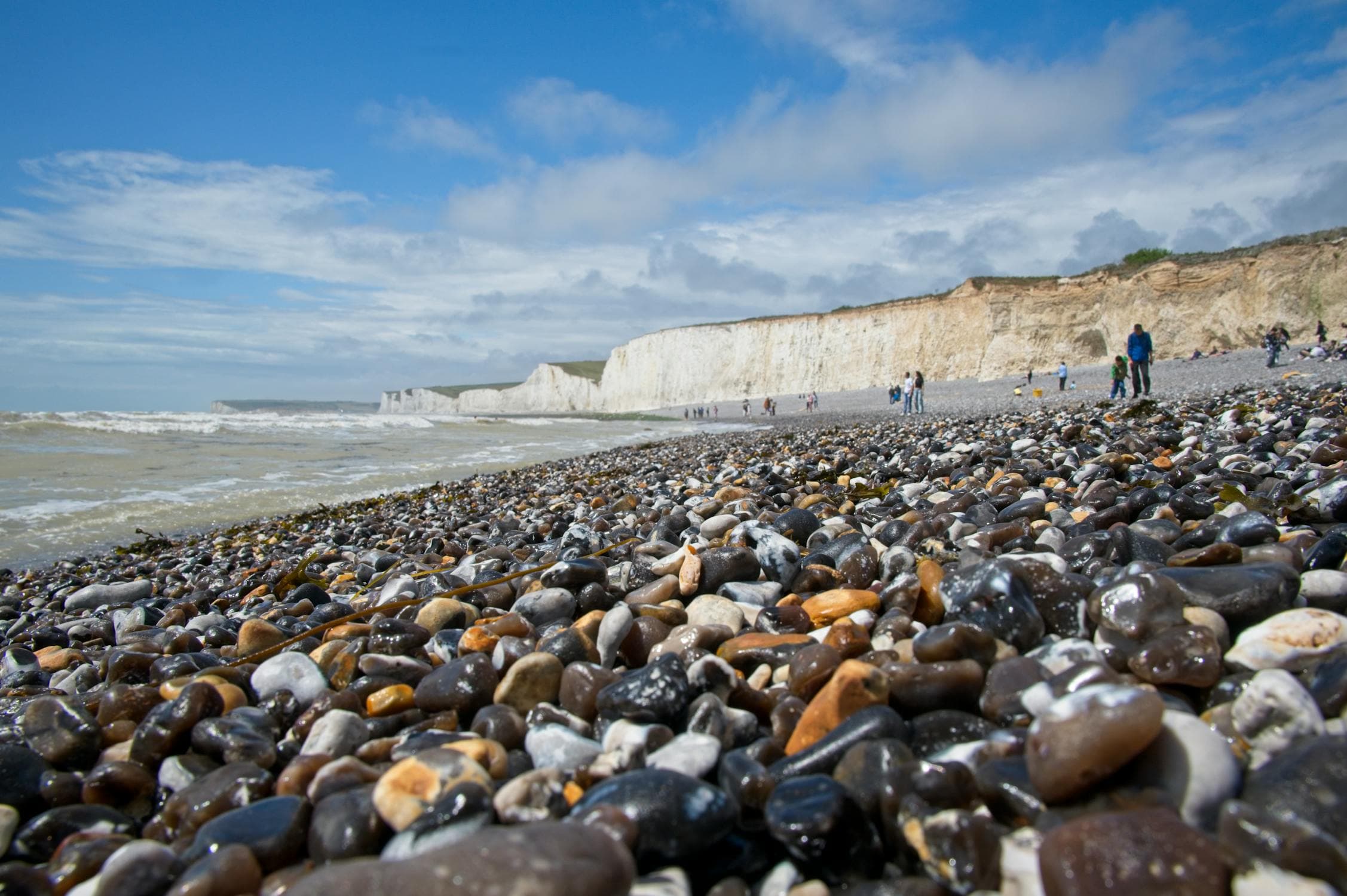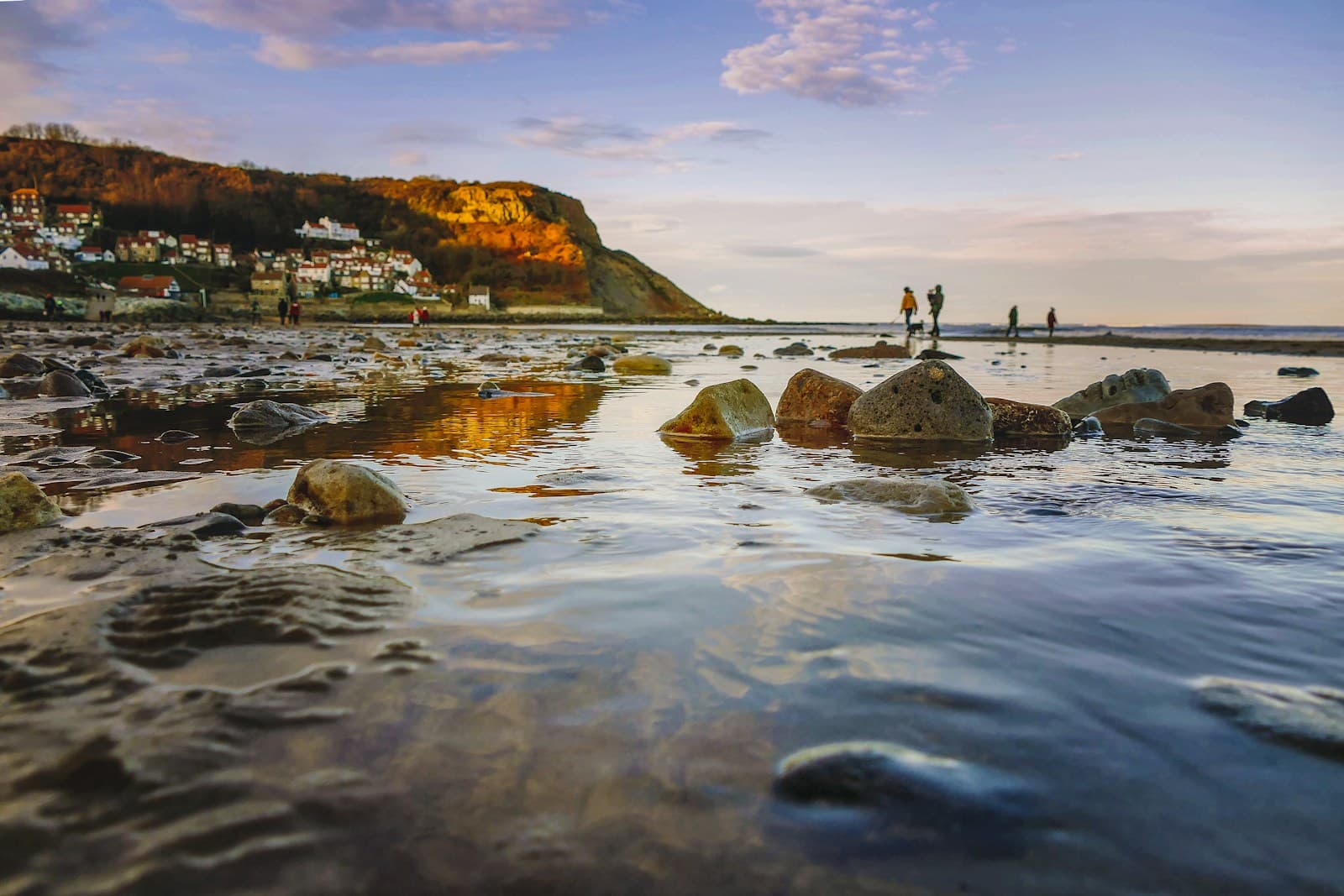
Kettleness is not a beach you stumble across. There are no signs pointing tourists this way, no ice cream vans in the car park, and no car park to speak of either. What you get instead is a stretch of wild Yorkshire coastline that feels genuinely remote, even though Whitby is only four miles down the road. If you are into fossils, raw coastal scenery, or the kind of place where you might not see another person for an hour, this is one of the best spots on the Yorkshire coast. It features in our guide to the best beaches in England for exactly that reason.
What Kettleness Beach Is Actually Like
Calling it a beach is generous in the traditional sense. There is no golden sand waiting for you at the bottom. What you find instead is a dramatic foreshore of rock platforms, scattered shingle, and massive rounded nodules that create something like a lunar landscape at sea level. The rocks are dark grey and brown shale, slick when wet, and riddled with fossils if you know where to look.
Above you, shale cliffs rise close to 400 feet straight up. They are not stable. Chunks of cliff face regularly break away and crash onto the foreshore below, which is actually what makes the fossil hunting so productive here. Fresh material gets exposed constantly. But it also means you need to stay well clear of the cliff base and never shelter under overhangs.
On certain days, a waterfall cascades down the cliff face and runs across the rocks toward the sea. It depends on recent rainfall, but when it is flowing it adds another layer to an already dramatic scene.
The Fossil Hunting
This is what most people come for, and Kettleness delivers. The Upper Lias shale that makes up these cliffs is packed with Jurassic fossils. Ammonites are the most common find, ranging from thumbnail-sized to specimens the size of a dinner plate. Belemnites, bivalves, and occasionally fragments of marine reptile bone turn up on the foreshore after storms and cliff falls.
The best approach is to walk the foreshore at low tide and look at what has already fallen loose on the rocks. You do not need to hammer the cliffs, and honestly you should not, both for safety and conservation reasons. The loose material on the ground gives you plenty to work with. Bring a small bag for anything you want to take home and a camera for the bigger pieces you cannot carry.
If you are serious about fossil hunting in the UK, Kettleness sits on the same Jurassic coast geology that runs along this stretch of Yorkshire. The best sea glass beaches in the UK guide covers other coastlines worth combing, though fossils and sea glass tend to turn up in different spots.
Getting Down to the Beach
This is where Kettleness separates the casual visitors from the committed ones. The path down from the village is steep, rough, and involves sections where you need to use fixed ropes to scramble down loose ground. It is not dangerous if you take your time and wear proper boots, but it is not a stroll either. Trainers will not cut it, especially after rain when the shale turns into a skating rink.
The descent takes about 15 to 20 minutes. The return climb takes longer and is harder work. If you have bad knees or dodgy ankles, think carefully about whether this is the right beach for you. There is no gentle alternative route down.
Tides: The Non-Negotiable
You cannot visit Kettleness without checking the tides first. At high water, the sea reaches the base of the cliffs and the entire foreshore disappears. People have been caught out here, and the combination of rising water, unstable cliffs, and no phone signal makes it a genuinely dangerous situation.
Check the Whitby tide times before you leave and plan to be on the foreshore around low tide. Give yourself at least two hours before the water starts coming back in, and start heading back up the cliff path well before you need to. The tide can move faster than you expect, especially with an onshore wind pushing it.
Getting There and Parking
From Whitby, take the A174 north for about four miles and turn right toward Kettleness village. The village is tiny, just a handful of houses on the clifftop. Parking is on a grassed verge and there is space for maybe six or seven cars at most. No marked bays, no pay machine, no facilities of any kind.
A better option for many people is to park at Runswick Bay, about 1.2 miles to the north. Runswick has a proper car park, public toilets, a couple of pubs, and a genuinely pretty village to wander around. From there, you can walk the Cleveland Way coastal path south to Kettleness. The walk takes about 30 to 40 minutes and the clifftop views are excellent. It turns the trip into a proper half-day outing rather than just a beach visit.
If you are exploring more of the Yorkshire coast, the nearest beaches to Birmingham guide covers other accessible options in this part of England, though Kettleness is further north than most of those picks.
The Cleveland Way Connection
Kettleness sits right on the Cleveland Way, the 109-mile national trail that follows the edge of the North York Moors and the Yorkshire coastline. If you are walking the trail, this section between Runswick Bay and Kettleness is one of the highlights. The path runs along the clifftop with open views across the North Sea, and on clear days you can see for miles.
Even if you are not doing the full trail, walking a section of it in either direction from Kettleness gives you a sense of how wild and undeveloped this stretch of coast remains. There are no caravan parks or amusement arcades up here. Just grass, cliffs, and ocean.
Is Kettleness Beach Worth the Effort?
If you want fossils, solitude, and genuinely dramatic coastal scenery, yes. This is not a family day out beach and it is not somewhere you go for a swim. It is a place for people who like their coastline raw and do not mind working a bit to reach it. The combination of the Jurassic geology, the towering unstable cliffs, and the near-total absence of other visitors makes Kettleness feel like somewhere that the rest of the world has not quite noticed yet. For something equally dramatic but in a completely different way, Stiniva Beach in Croatia requires a similar scramble down to reach a stunning hidden cove.