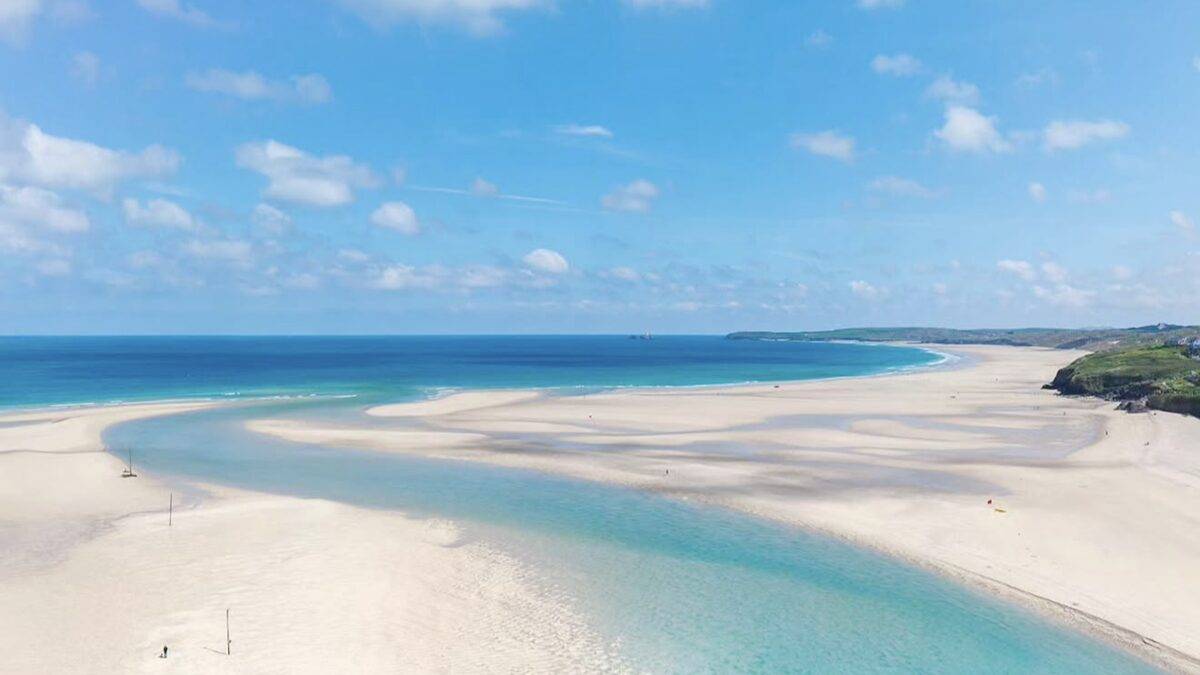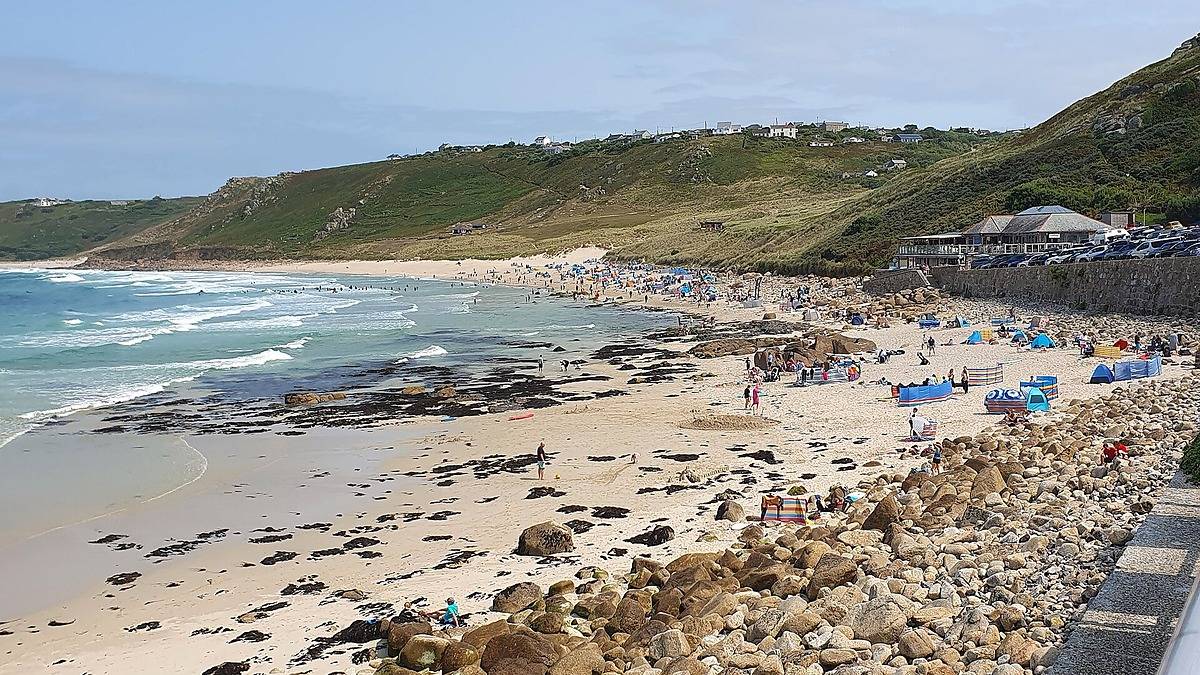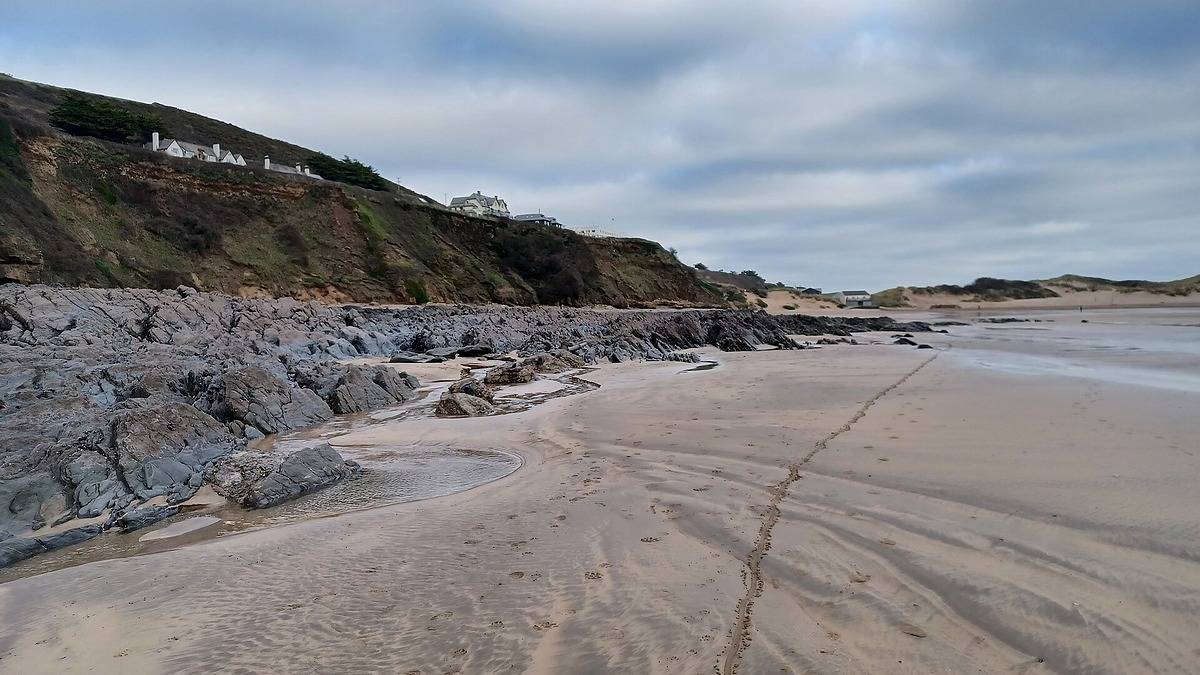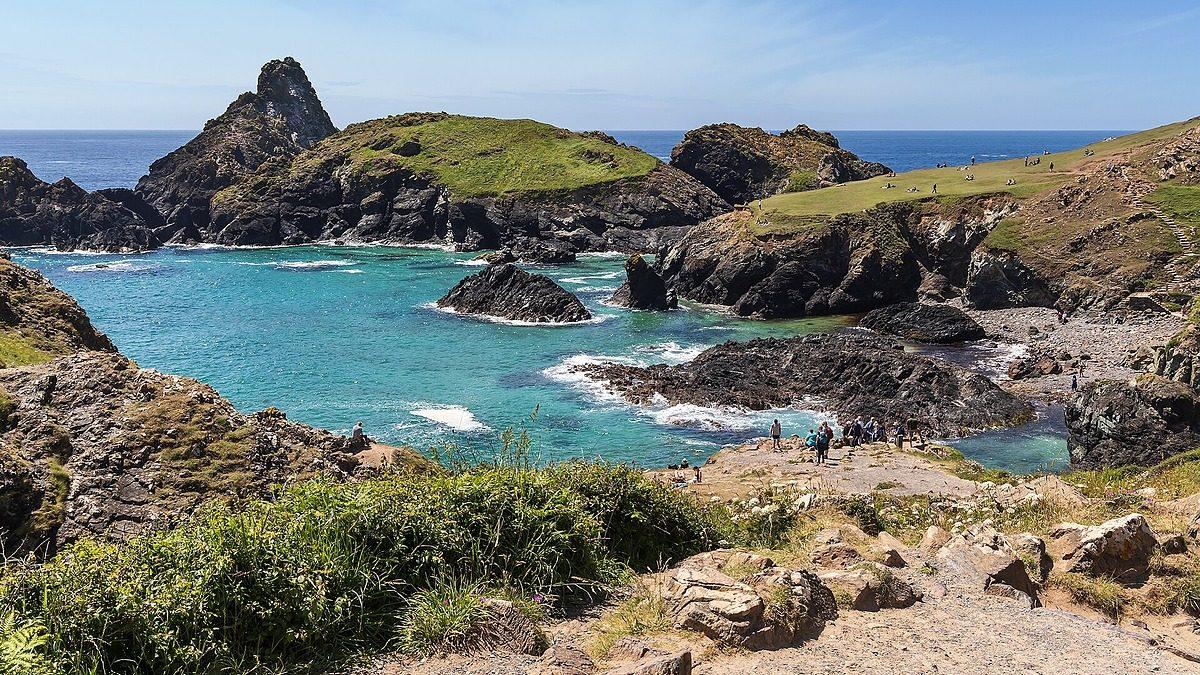
Kynance Cove is a small National Trust beach on the west side of the Lizard peninsula in Cornwall, with white sand, turquoise water and dark serpentine stacks just offshore. It is one of Cornwall's most photographed beaches, according to the National Trust, and the sand almost completely disappears at high tide. That makes the tide table, more than the weather, the thing that decides when you go.
What Kynance Cove is like
At low tide the beach opens into a series of coves and connected caves, and you can explore the stacks around Asparagus Island, the largest of the islands, on foot. As the water drops it reveals spots the National Trust names, including the Ladies Bathing Pool and the Drawing Room.
Its scenery has made international lists. Kynance came 26th in the 2026 Europe ranking from World's 50 Best Beaches. In 2024 it was the only British beach in the same team's global top 50, at 48th. For how it compares with Porthcurno and the rest of the county, see our guide to the best beaches in Cornwall.
When to visit Kynance Cove
Plan the day around low tide. On its things to do page, the National Trust says the beach almost completely disappears at high water and warns visitors not to get cut off. Check a tide table for the Lizard and arrive while the tide is still falling, a couple of hours before low water. Head back off the islands well before it turns.
In 2027, aim for May, June or October. According to the Trust, the cove is extremely busy with limited parking throughout July, August and September, and its advice for summer is to arrive early. Dogs are also banned from the sand from 1 July to 31 August, 10am to 6pm. If you can only come in the school holidays, we suggest getting there before 9am or after 5pm.
Winter visits work if you treat them as a clifftop walk with a beach attached. Parking is easier and dogs can use the sand, but the café keeps shorter hours (10am to 3pm, weather permitting), daylight is short and the Trust warns that the weather on this coast can change rapidly.
How to get to Kynance Cove
By car, take the A3083 south from Helston towards The Lizard. Turn right at the brown Kynance sign, about half a mile before Lizard village, and follow the lane to the National Trust car park (postcode TR12 7PJ). When the car park is full in peak season, the Trust closes the turning from the A3083.
Without a car, Go Cornwall Bus route 34 runs from Redruth station through Helston and Mullion to Lizard village green. Buses run about hourly through the day, according to the Transport for Cornwall route 34 timetable. From the green, the National Trust puts the walk to the cove at about 2 miles (3km). Checked November 2026.
Kynance Cove parking: prices, JustPark and when it fills
Parking is in a single clifftop car park, small for the number of people who come. Charges below are from the National Trust's Kynance Cove page. Checked November 2026.
- Up to 1 hour: £2 for non-members.
- Up to 4 hours: £5.
- Over 4 hours: £10.
- National Trust members: free, but you must scan your membership card at the machine each visit.
- Paying: coins only at the machine, or the JustPark app with location code 80599. Download the app at home, because the signal on site is poor.
Coaches cannot use the car park. Private car parks open near the Lizard in the season, but the Trust says they are 30 to 40 minutes' walk from the cove.
Walking down to the cove: steps and a pushchair route
No vehicles can reach the beach. From the car park, the main path takes about 10 minutes, is steep in places and finishes in steps onto the sand. Allow longer for the climb back, especially with children or a cool box.
A flatter pushchair route follows a track round the back of the beach, avoids the steps and comes out by the café in 15 to 20 minutes. At high tide, when the sand is almost all under water, the Trust says you'll need this route. For disabled visitors, its accessibility list includes designated parking and an accessible toilet in the car park, but also steps and uneven terrain, so the cove is hard going for wheelchair users.
Can you swim at Kynance Cove?
Yes, with care. No lifeguards patrol the cove, so pick a calm day around low tide and stay in the sheltered water near the main beach. Keep an eye on the channels between the islands and the cliffs as the tide comes in, because that is where people get trapped.
People do get caught out. On 25 August 2025 the Lizard RNLI lifeboat launched after reports that a dog and possibly its family had been cut off by the rising tide. Two staff from the Kynance Cove Café got the family to safety before the lifeboat arrived. The crew then reached the dog, which had scrambled onto the cliff of Asparagus Island, the RNLI reported. There is an SOS phone on the beach, according to the café. In an emergency, call 999 and ask for the Coastguard. Checked November 2026.
Dogs, the café and toilets
Dogs can use the beach from September to June. From 1 July to 31 August a seasonal council ban keeps them off the sand from 10am to 6pm, but the heath and clifftop paths stay open to dogs all year.
A National Trust concession just above the sand, the Kynance Cove Café opens daily from 10am, closing at 3pm in winter, when it may stay shut in bad weather. It serves pasties, sandwiches, jacket potatoes, cakes and local beer and cider. Toilets are in the car park and at the cove. Showers are not among the facilities the Trust lists.
Walking from Kynance Cove to Lizard Point
From the cove, the South West Coast Path runs to Lizard Point, mainland Britain's most southerly point, in about 2.5 miles (4km), according to the National Trust. For a longer day, the Trust also lists a Lizard coastal walk from Kynance of about 7 miles (11.2km). Both routes are exposed clifftop walking, so wear proper shoes and take a layer. Doing the walk first and dropping to the beach for low tide makes good use of a parking ticket.
Is Kynance Cove worth visiting?
Yes, if you time it to the tide. Walkers, photographers and confident swimmers get one of the best-looking beaches in Britain, with caves and islands to explore around low water. With the café and toilets on hand, a half day is easy.
Families with small children, anyone who struggles with steep steps and people who want lifeguards should think twice. Our Hayle Beach review covers a lifeguarded beach on St Ives Bay with miles of flat sand instead.
For the best visit, pick a May, June or October weekday when low tide falls around midday. Park early, walk to Lizard Point and back while the tide is high, then go down to the sand as it drops.